This year, my annual film awards have been delayed and put off and just plain forgotten about, which is why I find myself here in the not so timely time of late April with nary a reflection on my part on the best that last year had to offer. And come to think of it, last year turned out all right, despite whatever reservations I was still having in the fall. Turns out that I spent the first half of the year watching all the wrong films, and between some stellar year-end releases and a few I was foolishly holding out on from earlier, things came together very nicely - almost too nicely - and I'm still in denial that 2010 may have been one of the better year for film in the last decade (still got nothing on 2007 though). In fact, I went from initially planning to downgrade my usual Top 25 to a Top 20, but found that nothing short of 30 was going to cut it.
Top 30. Out of how many, you ask? I counted 67 for certain, but it's possible that a few others slipped through the cracks. And so maybe it's excessive that almost half the films I saw last year are making my countdown (and more still will manage nominations in other categories), but what can I say, they were all worth mentioning.
Not quite yet with the Top 30 countdown, though. We're saving that for the epic finale of Tristan's 2010 Film Awards: Part 3. There's a lot of ground to cover before we get to that, although I'm doing my part to keep things interesting by judiciously choosing which categories are actually worth keeping around.
There are 13 in all. Part 1 covers the technical awards - Editing, Cinematography, Score - as well as Ensemble, Screenplay (original and adapted combined) and Scene. Oh, and a personal favorite that I like to call: Films That Weren't Supposed To Suck (But Totally Did).
Part 2 will follow shortly (really, I promise) and consist of the acting awards - Supporting Actor, Supporting Actress, Actor and Actress - and I'll work Director in there somewhere.
Part 3 is all about Best Picture.
Oh, and in an effort to distance myself from every awards show ever, these categories will all unfold in list format, counting down from 5, 10, or in the case of Best Picture, 30 nominees. So no more guessing who came in second or who barely made the cut. My thought process is an open book.
One last note: I'm considering two films that I saw in 2009 (and listed, in fact, in my awards last year) as being fairly in play. This is in an effort to synchronize my awards to US releases, so there's a very very small amount of repetition on my list from last year. We cool with that? No? Oh, you don't care. Shall we begin?
Films That Weren't Supposed to Suck
(But Totally Did)
It's too easy to pick on the true disasters of 2010. Alice in Wonderland was terrible. Clash of the Titans didn't fair much better. But this we all know, and seeing them show up again and again on worst lists just becomes redundant. How about instead we have a round of applause for these films that aimed for something, whether that something was art or heart or social commentary, and failed spectacularly. Okay, maybe not spectacularly, because that implies there's some joy in watching the catastrophe. No, these films just didn't cut it for one reason or another, and while I only have outright contempt for my winner, I won't be revisiting this lot any time soon. Runners up: Life During Wartime and Four Lions.
5. Shutter Island

4. I Am Love

3. Dogtooth

2. Somewhere

1. The Fighter

Best Ensemble
Not a weak category per se, but one where the choices were all pretty obvious to me right away. All of the following films pulled in multiple acting nominations in my awards (one has four!) and I'm sure I could have worked in more members for every cast had I a few extra slots. If I had to stretch this, I'd have included Black Swan and Carlos.
5. Ondine

4. Never Let Me Go

3. Animal Kingdom

2. The Social Network

1. Another Year

Best Editing
There's a few different approaches to the art of editing covered in my choices below, and I certainly had to make a few judicious cuts just to make it to these respectable five. One selection brilliantly depicts the passage of time along with a growing cult of personality through nearly every trick in the book. On the other hand, I've also chosen a rare minimalist masterpiece, the cuts never flashing, but extremely important to the overall mood. Next comes a picture superbly cut in time to the grandiose score, followed by a trippy, kinetic comic book style adventure. In all, editing was crucial to success. But the winner, there's a case where editing (not performance, contrary to what you've read) carries the entire film on its shoulders. I can't imagine any film last year being more deserving. Runners Up: Mother, Carlos, A Prophet
5. Vincere

4. Bluebeard

3. Black Swan

2. Scott Pilgrim vs. The World

1. 127 Hours

Best Score
Original/Adapted/Whatever. I very rarely can think back on a film and recall the score. It's rare. I can count three times in the previous decade where this happened and that's about it. That doesn't mean that I don't absolutely adore some compositions, and leave little notes to remind myself which ones are worth revisiting. In the case of last year, I wrote five such notes, and from that am confident that these are the five scores most worth celebrating. Runners Up: The Illusionist, The Social Network
5. Vincere

4. Night Catches Us

3. Black Swan

2. White Material

1. The Ghost Writer

Best Cinematography
Always my favorite of the technical categories, probably because I'm attracted to pretty pictures and shiny objects and things in general that distract me from boring, unimportant stuff like plot and content. There were lots of stunning looking films last year, more than I could find room for fairly on a runners up list, but forced to narrow the field down to five, it would look something like what follows. My winner here is one for the books.
5. The Ghost Writer

4. The American
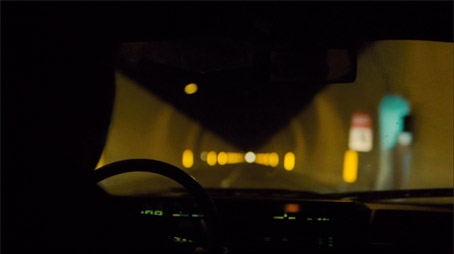
3. Black Swan

2. Enter The Void

1. Ondine

Best Screenplay
Here's a category that I do think is a bit weaker than in most years. Which isn't to say any of these is less than great, but it was an odd year where I found most of the landmark films owed very little of their success to the screenplay. So, here's the ten I came up with, though the last few could probably have been swapped out for other favorite films of mine from last year just as easily.
10. A Prophet


8. Carlos

7. Mother

6. Winter's Bone

5. Animal Kingdom

4. The Social Network

3. Terribly Happy

2. Another Year

1. Never Let Me Go

Best Scene
Finally, our last category of Part 1 will countdown my 10 favorite scenes of last year (a few of them boasting quite a length). There were definitely films that I wish I could have worked in here - and honestly I tried, but short of mentioning the entirety of Enter the Void, I just couldn't break it up - but I'm totally content with the 10 I came to choose and I hope you'll see why. There's a lot here that come at the end of their films, and so I solemnly swear not to include anything approaching spoiler territory. And I technically cheated with my winner, because it's really a set of two scenes, but they're thematically connected and in fact bookend the entire film.
10. Mary bonds with Ronnie - Another Year

9. Dean & Cindy sing and dance - Blue Valentine

8. Evil Doctor Porkchop - Toy Story 3

7. Passing the note/the end - The Ghost Writer

6. Target practice - The American

5. The extended O.P.E.C. takeover - Carlos

4. The Magician leaves a note and skips town - The Illusionist

3. Teardrop and the Sheriff have a standoff at the truck - Winter's Bone

2. The climactic performance of Swan Lake - Black Swan

1. The dance sequences bookending the film - Mother

Not bad, huh? Part 2 will be along before you know it, so stay tuned kids.


