Sunday, December 13, 2009

Best of the Decade - Albums

Coming up with favorite albums of the decade turned out to be far easier than songs. Choosing between one song and another often seemed arbitrary, but albums aren't as fleeting, and the following all left quite an impression on me. I was going to go with 25, but apparently I can only upload 20 pictures per post, so 20 entries it will be.

Without further ado, my 20 favorite albums of the last te
n years.

20. Saturdays = Youth

M83


19. Santogold
Sa
ntogold


18. Electric Versio
n
The New Pornographers


17. The Fame Monster
Lady Gaga


16. Ágaetis Byrju
n
Sigor Rós


15. The Execution of All Things
Rilo Kiley


14. Speakerboxx/The Love Below

Outkast


13. Let's Get Out of This Country
Camera Obscura


12. Beirut

The Flyi
ng Club Cup


11. Vampire Weekend
Vampire Weeke
nd


10. Home

Dixie Chicks


9. The Reminder
Feist


8. Kala

M.I.A.


7. Oracular Spectacular
MGMT


6. Extraordi
nary Machine
Fiona Apple


5. Fox Confessor Brings the Flood
Neko Case


4. Yoshimi Battles the Pink Robots

The Flaming Lips


3. Challengers
The New Pornographers


2. Funeral

Arcade Fire


1. Stories From the City, Stories From the Sea
PJ Harvey

Saturday, December 12, 2009

Best of the Decade - Songs

Poor planning on my part landed myself right in the middle of a top 100 films project in the midst of any listophiliac's virgin spring - the closing of a decade. That's a once in a blue moon excuse to pound out lists on the best (and the worst, why discriminate?) of everything the last 10 years have served up. So while I'll deliver false promises to you about my diligent work on my Top 100 films, the truth is that I've not been rewatching much of anything lately. Instead, I've been catching up on my cultural blindspots of the aughts (That is what they are, these past 10 years. Or maybe not, but I've gotta stick to something).

And contrary to past history, this blog is about more than just movies. Or at least I founded it on those pretenses. Ostensibly, I listen to a whole lot of music, and television and I are on better terms than we used to be (only on dvd though). Ergo, I have an excuse to post my favorites of the aughts, across all mediums - except books 'cause I read old shit - and you can skim through these boring paragraphs and get right to the rankings, because honestly that's all any of us care about anyway.

Note, however, that only my opinions on movies are infallible. And we'll be starting with music, so feel free to register your disapproval on this one. Positive feedback is acceptable as well, but far more boring to read.

Top 50 Songs of the Decade

50. Island in the Sun - Weezer
49. All The Single Ladies - Beyonce
48. Rockin' the Suburbs - Ben Folds
47. The Fear - Lily Allen
46. Why Do You Let Me Stay Here - She & Him
45. Time to Pretend - MGMT
44. Portions For Foxes - Rilo Kiley
43. Take Me Out - Franz Ferdinand
42. Feel Good Inc. - Gorillaz
41. All For Swingin' You Around - The New Pornographers

40. Through the Wire - Kanye West
39. Strange Overtones - David Byrne & Brian Eno
38. Love Today - Mika
37. Fidelity - Regina Spektor
36. Jesus Etc. - Wilco
35. O Saya - A R Rahman & M.I.A.
34. I Don't Feel Like Dancin' - Scissor Sisters
33. Let's Get Out of This Country - Camera Obscura
32. If the Brakeman Turns My Way - Bright Eyes
31. Good Fortune - PJ Harvey

30. Disturbia - Rihanna
29. Seven Nation Army - The White Stripes
28. Pavlov's Bell - Aimee Mann
27. My Girls - Animal Collective
26. Las De La Intuicion - Shakira
25. Chicago - Sufjan Stevens
24. Neighborhood #1 (Tunnels) - Arcade Fire
23. Maps - Yeah Yeah Yeahs
22. Dog Days Are Over - Florence and the Machine
21. Lights Out - Santogold

20. Missed the Boat - Modest Mouse
19. Yoshimi Battles the Pink Robots Part 1 - The Flaming Lips
18. Your Cover's Blown - Belle and Sebastien
17. Come into My World - Kylie Minogue
16. A Better Son/Daughter - Rilo Kiley
15. The Bleeding Heart Show - The New Pornographers
14. 1234 - Feist
13. French Navy - Camera Obscura
12. Crazy - Gnarls Barkley
11. Hold On, Hold On - Neko Case

10. Bad Romance - Lady Gaga
Like Gaga herself, a work of abstract art. Baroque, beautiful and utterly infectious.

9. Hounds of Love - The Futureheads
The best cover song of the decade? Not just that, the vocal play going on is nothing short of incredible.

8. Digital Love - Daft Punk
Eerily appropriate for a decade under the influence of digital pursuits.

7. All My Friends - LCD Soundsystem
Somewhere between graduating and growing up in general, this song attained an unexpected level of significance to me.

6. Rebellion (Lies) - Arcade Fire
It's a murky plunge into the band's greatest aural tour-de-force.

5. Travelin' Soldier - Dixie Chicks
Heartfelt, graceful, and absolutely the best American song of the decade. Sorry haters.

4. Electric Feel - MGMT
A sublime and hallucinatory experience. A song fueled by so many drugs that even the most casual listener will be whisked along on the trip.

3. Hey Ya - Outkast
Try as they might, no amount of radio saturation can kill this groove.

2. Myriad Harbor - The New Pornographers
A love letter to New York as great as any of Woody Allen's finest.

1. Paper Planes - M.I.A.
It feels both personal and universal, the beat is damn-near unstoppable, and having so firmly embedded itself into the culture of these last few years, there's no song more deserving of the top honors. I welcome this song anywhere; on an iPod, on the dance floor, or in Slumdog Millionaire. It could hold its own against my favorites from any other decade, so that's a sign that this is the right choice.


I'd have to guess that my choice for #10 will raise the most eyebrows. Anyhow, fire away.

Wednesday, December 2, 2009

Chaos Reigns in the Fantastic Mr. Fox!

Hello my (theoretical) readers,
I've been away for some weeks, finishing up the dreaded graduate school applications, and so progress on my top 100 and posting all together has come to a screeching halt. But it's over now, and I wasn't being entirely productive, because I still managed to squeeze in a bounty of 2009 releases, the quality of which I will update you on...now:

Bright Star
Bright Star is the story of John Keats - before death made him poet extraordinare - and the woman who through no particularly remarkable qualities informs and inspires his work up until death. Tenderly made and carried by two evocative performances by Abby Cornish and Ben Whishaw, Jane Campion's latest has one unfortunate blight upon it, and that would be the bombastic Paul Schneider. Of course, I realize that's just how his character was, but he intrudes upon almost every scene of the film and he's just too insufferable for me to find the slightest pleasure in these (many) moments. He is loud and boorish, and never comes to a satisfying end, and the film is much worse for his presence. But...the film does enough else right for this not to be a total drag. Recommended, but with just the one notable reservation.

The Limits of Control
Jim Jarmusch sends Isaac De Bankole on an assassin's odyssey by way of a series of representatives of an enraged art community. At least that's the idea I got from it all, and I was thoroughly enjoying myself right up to the end - when of all things - I think Jarmusch gives us one line too many towards a possible elucidation. But the whole ordeal is pretty fascinating, and though very little happens in the way of plot, every odd rendezvous was interesting enough on its own terms. If I stop short of loving it, it's because for all the intrigue, I'm not convinced there's a whole lot going on here. Still, there's worse things to be than slight, and if you generally like what Jarmusch serves up, you won't be wasting your time here.

An Education
It's an absolute delight through and through. The story comes out of Britain in the early 1960s and centers on a sharp young girl with her sights set on Oxford. The unforeseen obstacle here becomes the nearly 30 year old man she meets and begins seeing, seducing her with the aristocratic tastes and charms she's always dreamed of. Carey Mulligan is magnetic and sophisticated and lovely without being some model for perfection. I do think when my mind's at last made up that she'll have given my favorite performance of the year. The film wouldn't be the joy that it is without her presence. But everyone else does admirably as well. Alfred Molina, Peter Sarsgaard and Rosamund Pike all deserve loads of credit, but the best supporting performance is easily Olivia Williams as the icy, but well-meaning, school teacher. Seeing this during the final throes of my grad school application process was perfect timing, and the whole film is smart, stylish and kind of invigorating. Among the finest I've seen thus far in 2009.

The Fantastic Mr. Fox
And today I got around to my long-anticipated next installment of Wes Anderson's oeuvre. I loved it, not as much as The Royal T's, but loved seems an appropriate word. The voice-work is uniformly excellent with my favorite turns coming from Jason Schwartzman and Michael Gambon. Clooney is great, and not distracting at all, considering you know it's his voice propping up the character. The single best thing the film has going for it though is Anderson's style, which slips right on into the animated world quite effortlessly. From the camera movements to the music, it's the same Wes we know from before, and how great his style looks in stop motion! So The Fantastic Mr. Fox will be the third animated film this year (after Ponyo and Coraline) that I'm rooting for to kick Up's ass in the animated feature category at the Oscars. And unlike the other two, this may actually have a chance at doing just that.

Tuesday, November 10, 2009

Lars von Trier & His Fantastic Talking Fox


I could have spent Saturday afternoon shopping in downtown Chicago, or watching the Michigan State game at a local tavern, but no, I decided to stop into The Music Box and witness Charlotte Gainsbourg frolic in the forest with a demonic fox before inflicting graphic genital mutilation on her husband (the ever-so-creepy Willem Dafoe) and herself. So basically, I’m glad I saw Antichrist alone, because I was at least aware of what I was getting myself into.

Lars von Trier seems bound to leave his misanthropic stamp on every genre. Dancer in the Dark is the most harrowing musical you’ll ever see, Boss of it All is his attempt at comedy, and it seems that his next project will see the great Dane take on science fiction. Antichrist, of course, is horror, and in the sorriest decade that genre has ever seen, it’s damn near one of the best. The chilling cinematography leaves no room for sunshine. The muted colors and slow motion shots render us in the perpetual haze that follows unspeakable tragedy – in this case the death of a child – and the handheld camera is perfectly suited to the instability of Gainsbourg’s character. And more on her fierce performance; it’s easily the best to come out of a horror film since Shelly Duvall played a similarly abused woman in The Shining.

Except Gainsbourg is not sympathetic. She’s as crazy as her husband is arrogant, and the mutual destruction that they bring upon each other seems deserved. And that begins to get at why I didn’t quite love the film, even if I greatly appreciated it. The third chapter is titled Despair, a feeling I walked away from Breaking the Waves and Dancer in the Dark feeling in spades (Dogville had it too, but there the despair turned quickly to perverse satisfaction). But though the He and She of Antichrist undeniably feel this weight upon them, the feeling never reached through the screen and seized me. That is because unlike von Trier’s afore mentioned films, there’s no empathy to go around here. Both husband and wife are terrible people, and as I watched them slowly, if brutally, destroy each other, I could only think how right it all seemed. Yet my hatred could have been stronger, it didn’t come close to the contempt I felt for the residents of Dogville, and so somewhere in all this, the film lost a bit of the impact I was expecting it to have. I realize it’s not fair to expect the same emotional punches, only delivered with distinct flair, from every von Trier film, but I can’t help but thinking that much of my reaction here came from the graphic nature of the images. I’ve toyed with comparisons to the Saw films, but it’s impossibly better than those. The direction is impeccable, even if it is second tier von Trier, and the performances he manages to elicit from Gainsbourg and Dafoe are startling. And there’s much more to it than shock and gore, though that’s no doubt what you’ll walk away remembering (that, and the final shot).

But you know, although I liked it well enough, I can’t honestly give it my endorsement. I imagine I’m among the few who wouldn’t fall on one extreme or another in regards to Antichrist. If you already wanted to see it, then you probably should. But if it didn’t look like your cup of tea in the first place, then let me assure you that it definitely is not. Funny enough, what might justify the existence of the entire movie is the dedication tacked on after the last image fades to black. After two of the bleakest hours I’ve had in some time, I needed a good laugh on my way out the door.

Sunday, November 1, 2009

Tristan's Annual Horror Movie Marathon

Every year when October creeps around my Netflix queue gets set to horror for the month. I got a late start this year on account of my New York trip, but I still covered a respectable amount of ground. Unfortunately, Nightmare on Elm Street never shipped despite hanging at the top of my queue all month, and I may have to resign myself to watching it some time when it's in less demand. But allow me to power through the odd assortment of horror/thriller/and otherwise spooky films I did manage to catch.

Bram Stoker's Dracula (Francis Ford Coppola, 1992): Coppola pulls off overindulgence better than anyone since Sternberg. Gary Oldman, Richard E. Grant, Cary Elwes and Tom Waits understand this, and they're wonderful. Winona Ryder and Keanu Reaves don't, and oh my are they terrible.

The Cat O'Ninetails (Dario Argento, 1971): Dario Argento is officially my favorite horror director. He's still getting warmed up here, but the mood he sets is beyond creepy. Ennio Morricone's score sure helps too.

The Company of Wolves (Neil Jordan, 1984): Little Red Riding Hood battles werewolves and her own burgeoning sexual desires. Count me in.

Coraline (Henry Selick, 2009): Proof that Selick is what made The Nightmare Before Christmas something to marvel at, not Tim Burton (although I guess The Corpse Bride already told us that).

Dead Alive (Peter Jackson, 1992): A fun and freaky bloody mess of a film. The last forty minutes sustains a mind-boggling bloodfest that escalated well beyond the point of insanity.

Don't Torture A Duckling (Lucio Fulci, 1972): My first Fulci film. Predictable, but another worthy foray into giallo for me.

Drag Me To Hell (Sam Raimi, 2009): It's good to know that Raimi can still pull off his Evil Dead style tricks, but the end didn't quite work for me. Alison Lohman sure is a trooper though.

Hercules in the Haunted World (Mario Bava, 1961): It's visually quite eerie and gorgeous, but I can't get over how terrible the script is. I can deal with the bad dubbing, but the dialogue really lets this one down.

The Horror of Dracula (Terence Fisher, 1958): Christopher Lee makes a wonderful Drac. Otherwise, it's a just another solid adaptation of the horror classic.

In the Mouth of Madness (John Carpenter, 1995): John Carpenter has such a great eye for horrifying imagery. There's a bit too much of the "why won't anyone believe what I just saw?" for my liking, but all the Lovecraftian frills more than made up for that.

Near Dark (Kathryn Bigelow, 1987): One of the best vampire movies I've ever seen. High energy, great performances, and a refreshing take on the genre.

Phenomena (Dario Argento, 1985): The script is fairly bad and Jennifer Connelly isn't a good enough actress to rise above bad material, but damn, Argento can still craft a masterful horror film even with these setbacks. There's some frightening set pieces and a few hilarious ones too (intentionally so). It didn't really kick in until the second half, but I highly enjoyed this by the end.

Ravenous (Antonia Bird, 1999): Cannibalism is creepy enough as it is, but I've always liked it best when served with a Michael Nyman score. The film is frightening, but it wisely keeps a good sense of humor about all the grisly details. Robert Carlyle turns in a wonderfully villainous performance.

Spider (David Cronenberg, 2003): Admirably acted and directed, though considerably less daring than I'd hoped for from Cronenberg. Still, I think I liked it more than his other films this decade.

Wait Until Dark (Terence Young, 1967): Very well written, and certainly unsettling. However, I think in the adaptation from stage to screen, something further could have been done to highlight the horror of living in constant darkness (from being blind). Both Alan Arkin and Audrey Hepburn were quite good.


That makes 15 films, so I think that calls for a mini-awards session. Based on my recent horror film viewing:

Best Male Performance: Robert Carlyle - Ravenous
Best Female Performance: Sarah Patterson - The Company of Wolves
Best Scare: the surprise beheading - Phenomena
Best Scene: The bar fight - Near Dark (RU, the whole bloody party scene - Dead Alive)
Best Screenplay: Ravenous
Best Music: Ennio Morricone - The Cat O'Ninetails
Best Art Direction: Bram Stoker's Dracula
Best Director: Kathryn Bigelow - Near Dark (RU, Francis Ford Coppola - Bram Stoker's Dracula)
Best Horror Film: Ravenous (RU, Near Dark)

Top 100 Films 45 -43

45.
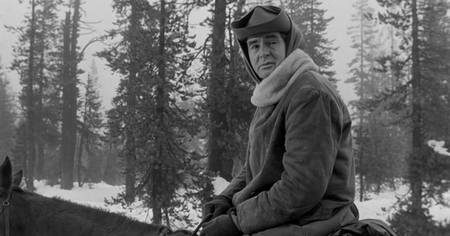
Once upon a time Tristan never would have dreamed of sticking a Western among his top 50s favorite films. When I was just starting to consider myself a film snob, I was far too eager to make sweeping generalizations about genres. Westerns got the short end of my cinematic stick. I warmed a bit to the likes of McCabe and Mrs. Miller, Destry Rides Again and The Assassination of Jesse James by the Coward Robert Ford, but it was with Once Upon a Time in the West that I finally made peace with the genre. The title suggests the stuff of legend. To invoke “once upon a time” is a bold statement of the films ambitions. But the concept comes straight from three of the great Italian directors, Sergio Leone himself alongside Bernardo Bertolucci and Dario Argento. Centered on the expansion of the railroads, the plot taps into the lifeline of the old West and seems certifiably epic. But that epic feel takes hold in every corner of the picture because Once Upon a Time in the West is a landmark of direction. Leone not only can frame a perfect shot, he can string them together into the perfect scene. Each of the four main characters is treated to an appropriately memorable introduction with the opening sequence featuring Henry Fonda’s ruthless assassin Frank being one for the books. Same goes for high tension confrontation on the train, and the inevitable final standoff. With one unforgettable scene after another, Leone never makes a false step. What he does that rarely comes off successfully in westerns is to make the heroes, the villain, and the girl into equally interesting characters. The proper introductions certainly help, and he couldn’t have cast the parts any better (Charles Bronson has never been this good), and most importantly, there’s an equal sense of importance to each of them. Ennio Morricone even gives each of character their own theme, and they weave together seamlessly into one of his best film scores, which I revisit frequently just to conjure up images of the film.


44.
Pandora’s Box, without the benefit of sound, stands among the most captivating films I have ever seen. This rests firmly on the sensual shoulders of Louise Brooks. Lulu is perhaps the most memorable face of silent cinema (or second to Falconetti, but Brooks is certainly first in my book) and so I don’t find it a stretch to call her performance a medium defining one. Her unabashed sexuality is striking, even today, and placed within the context of when the film was made, it’s remarkable. It’s among the many reasons why the late 20s up until the production code popped up is one of my favorite periods in cinema. As Lulu progresses from ambitious stage performer to utter destitution, we’re fascinated by all this misery of her own making. More compelling still are the men and women she casts her seductive spell upon along the way. We can’t help but see why. Pabst doesn’t need sound to pull this off. Brooks’ face and figure are quite enough.


43.
I had originally stuck Black Narcissus back somewhere in between 70 and 80 on this list, but when I revisited it for the sake of this review, I realized I’d been severely underrating it. My re-viewings have lead to some minor adjustments of the list, but nothing has jumped quite like this. Its upward mobility is indicative of my ever-increasing appreciation for the powerhouse directorial team of Michael Powell and Emeric Pressburger. I never would have thought it when I first caught Black Narcissus (my first of their films) but I would handily rank them among my five favorite directors, or I guess in this case, six. So this film was my first impression of the dynamic duo of classic cinema, and though I hadn’t been ready to tag it as a masterpiece straight off the bat, my recollection of it lingered thanks to the impact of the performances and the unparalleled power of the imagery.

Where else will you get to witness the slow unraveling of a cloister of nuns high in a Himalayan monastery? There’s something in the air, so they say, and you’ll believe it too. The art direction is the most breathtaking to ever come out of a studio, and the glorious matte paintings that encompass the background mark the monastery of Black Narcissus with a rare beauty that could only be created by an omnipresent hand. Overcome by passions and desires long since repressed, the nuns gradually break from their sanity. At the forefront of their collapse is Sister Ruth and the maddening lust she cultivates for the handsome British overseer, Mr. Dean. Conflicts of soul and body threaten to destroy the sisters and return the monastery once more to a place outside the realm of religious governance. Their undoing is ultimately of their own design, entirely independent of their intrusion in a seemingly mystic land. The failings of the sisters, much like those of the young Hindu prince and the atheist Mr. Dean, come from the most basic human desires, and indeed only seem like failures when viewed through the strict religious codes adhered to by the nuns. A thought provoking, visually resplendent and thoroughly mesmerizing piece of cinema.

Monday, October 19, 2009

Top 100 Films - 50 to 46

50.
Fellini goes Technicolor, and just because he can, goes completely overboard. I’m sure a lot of credit has to go to Criterion for their resplendent restoration, but the whole film is overrun by eye-poppingly beautiful color. As far as visual feasts-for-the-eyes go, I can’t think of many I’d rather indulge in. Juliet’s wanderings in the spirit world, and its subsequent intrusion into her own, provide ample opportunity for sensational costumes and set pieces. The circus scene, sadly too brief, explodes with life and character. Suzy’s lavish pad mixes shadow and brilliant light giving it a distinctly erotic ambiance. Even Juliet’s real world seems just out of place from the high fashion to the perfectly sculpted trees. But this is a fantasy, one of the best, and everything about the color palate and the set design is just as it should be.


49.
One thing I can’t saw for most films on this list is that I’ve had the pleasure of watching them in the theater. In fact, There Will Be Blood I think is one of only two, and there’s something special about being in on a film’s greatness right from the start. It’s a film of startling ambition, and that’s something we rarely see these days (only a handful this decade are in league with this, and they’re all still to come in my countdown). Paul Thomas Anderson, one of the most interesting presences in American cinema these days, has been shooting for the moon his whole career, and so it’s no surprise that he had this in him. The concept speaks to fundamental American values born from greed and religion and it arrived with its theme of blood and oil in the waning years of the Bush administration. The timing was perfect. Of course, so was just about everything else. Like all the most iconic screenplays, this one’s immensely quotable. Johnny Greenwood’s sharp score is perfectly unnerving. Robert Elswit’s cinematography renders every set piece a grand one. And towering in the middle is Daniel Day-Lewis as the deplorable, yet not altogether villainous Daniel Plainview. Every aspect stills seems so fresh, and there’s nothing I can really add to its praise that hasn’t been reiterated time and time again these past two years, but suffice it to say, it’s refreshing to have been a film fanatic at the time this hit theaters.


48.
The world of Brazil isn’t so impossibly different from our own. For a science fiction dystopia there’s not nearly the emphasis on technology you’d expect, nothing much beyond what we’re already capable of (at least in the 80s). But you could be forgiven for not noticing the similarities, because Terry Gilliam’s masterpiece looks nothing like you’ve every seen before. Brazil is a marvel of art direction. It’s no easy task to craft a world that operates on its own brand of logic, but to make such a place seem so cohesive that you never doubt it, well, that’s an accomplishment only equaled by Jacques Tati. Against all odds, Brazil holds together, though it seems that at any moment the walls may come down. Gilliam and company run amok through the dark and unstable buildings, like children acting out a scene in a bedsheet fort of grand design, gleefully ignorant of the impending collapse of their set. That’s why Brazil is at once dangerous and indefatigable, and I can’t think of two better compliments for a film stuck in the middle of the dullest decade cinema has yet to see.


47.Spoilers…Give me Kenji Mizoguchi any day over all the other classic Japanese masters. For proof, look no further than Sansho the Bailiff, although Ugetsu and Life of Oharu are nothing to sneeze at either. But Sansho delivers simultaneously a potent political commentary and a harrowing tale of familial bond, and since neither are typically my cup of sake, it’s speaks volumes that Mizoguchi binds me to the story as intensely as he does. Sansho’s prison-like estate makes for grand set piece, and the haunting cinematography sets the mood for Zushio as he chases his ghosts. The two lingering moments that I’ll never shake from my head come at the middle and end of the film respectively. Anju’s descent into the lake is bone-chilling, perhaps the most powerful depiction of family sacrifice in all of cinema, and it’s her absence that keeps the reunion at the end of the film from carrying the satisfaction you’d expect. That doesn’t diminish the effect of this final scene. Zushio and his mother are together once more, but the years have taken a terrible toll on her, and Anju’s absence weighs heavily on both of them. They’re together at last, but at great cost. It takes every ounce of self-control to hold back tears by this point - the moment is just that bittersweet. Kudos to Mizoguchi for proving I’m not heartless after all.


46.The opening scene of Sam Fuller’s uncompromising Naked Kiss lets you know exactly what’s in store for you in the next hour and a half. There’s a hooker pummeling some no-doubt deserving bastard with her purse. And suddenly after he yanks on her hair, her wig comes right off. She’s bald. This only makes matters worse, and she continues to beat his drunken ass to the floor. She seizes his wallet, takes exactly the money he owes her, and stuffs the remaining wad of cash in his mouth. Rarely has a movie so gleefully launched us into the fray. From there we jump to two years later, and our familiar whore, Kelly, now has a full head of hair and new prospects on the horizon. But as she strikes up a new life, leaving her former profession behind, she can’t help getting caught up in the dark underside of the town she now calls home. Had the opening scene not prepared us for virtually anything, the astonishing twist in the plot may have felt too shocking. Fuller never hides the dark edges of his films, but he shows a commendable amount of restraint just where he needs to here. The payoff is one of the great commentaries on small town America, and it feels very much like a precursor to Twin Peaks noir angle. And amid the 60s arthouse boom and infatuation with epics, Naked Kiss seems the most distinctly American film of the decade. Sheer greatness all around.